
Hydraulic presses for guardrail forming facilitate efficient production of traffic safety components
Hydraulic presses for guardrail forming facilitate efficient production of traffic safety components.
— Compatible with galvanized steel sheet pressing, providing equipment support for the mass production of road safety facilities.
Corrugated guardrails, as an indispensable safety component in highway infrastructure, are widely used in protection projects for expressways, national and provincial highways, urban and rural roads, and industrial park roads. When vehicles collide, the guardrails absorb impact energy through their own deformation, buffering the impact force and thus reducing personal injury and property damage. With the continuous expansion and upgrading of domestic transportation infrastructure, not only are new road projects constantly being implemented, but the demand for upgrading and renovating safety facilities on existing roads is also continuously increasing. The market is placing higher demands on the production capacity, forming precision, and finished product consistency of corrugated guardrails. Traditional ordinary stamping equipment, limited by machine rigidity and pressure stability, has significant shortcomings in the processing of large quantities of thick galvanized steel sheets, easily leading to problems such as workpiece springback, incomplete forming, and large dimensional deviations. Hydraulic presses for guardrail forming, with their mature and reliable sheet metal pressing capabilities, have now become the core production equipment for traffic safety component processing enterprises.
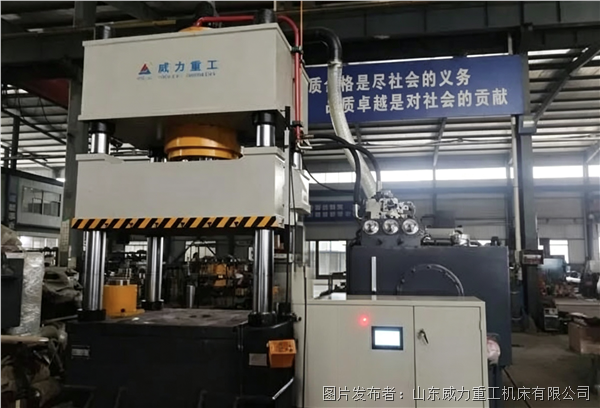
The mainstream guardrail panels on the market are mostly made of Q235 and Q345 galvanized steel sheets, and are divided into two main categories: two-wave and three-wave guardrail panels, with a wide range of sheet thicknesses. Two-wave guardrail panels are relatively thinner and are mostly used for ordinary rural roads and municipal roads; three-wave guardrail panels are thicker and mainly undertake the high-protection safety tasks of highway sections. During the workpiece pressing process, the steel sheet will undergo significant bending deformation, and the working conditions will have obvious eccentric loads. This places stringent requirements on the rigidity of the equipment body, the accuracy of the slider guidance, and the stability of the pressure output. If the rigidity of the equipment body is insufficient, slight deformation will occur under prolonged continuous pressure, directly causing deviations in the wave height, wave pitch, and bending angle of the guardrail panel, resulting in a large number of unqualified workpieces and increasing the company's rework costs and raw material losses.
Hydraulic presses for guardrail forming generally adopt a three-beam, four-column integral welded body structure. The upper crossbeam, movable slider, and lower worktable are all made of thickened steel plates and welded together. After welding, a vibration aging process is used to fully eliminate the welding stress inside the machine body, preventing deformation of the machine body during long-term load operation. The four columns are heat-hardened and chrome-plated for wear resistance and damage resistance. Combined with a high-wear-resistant guide sleeve structure, the slider runs smoothly and stably. Even under eccentric load conditions such as asymmetrical pressing of guardrail panels, the pressure can still be applied vertically and evenly to the surface of the plate, effectively ensuring that the forming dimensions of each guardrail panel are uniform and the finished product meets the production standards of the traffic safety component industry.
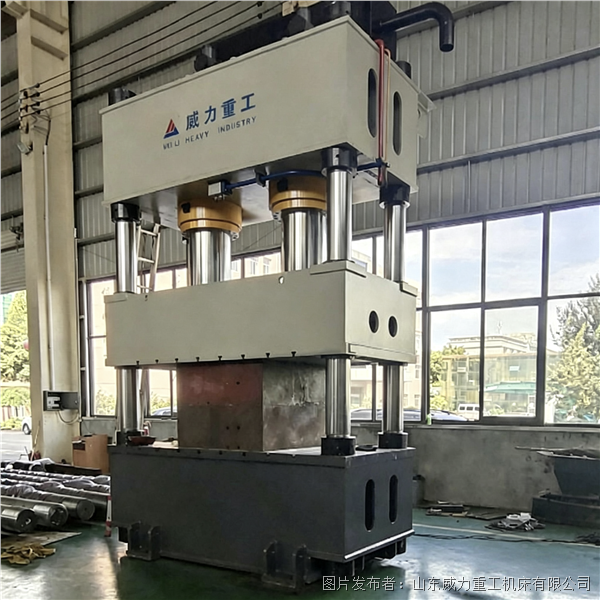
The machine's hydraulic system adopts a cartridge valve integrated oil circuit layout, significantly reducing the number of external pipeline joints and lowering the probability of oil leakage. It features fast pressure response and supports both constant pressure and constant stroke forming modes, with freely adjustable pressure holding and delay processes. Galvanized steel sheets naturally exhibit a springback tendency after pressing and unloading; the pressure holding and shaping function effectively stabilizes and shapes the workpiece, suppressing springback defects and reducing defects such as wrinkles and cracks. When producing guardrail panels of different specifications, operators can flexibly adjust the pressing pressure, downward speed, and pressure holding time according to the sheet thickness, adapting to both thin-material two-wave guardrails and thick-material three-wave guardrails. The equipment is equipped with a PLC touch-screen intelligent control system with a simple and easy-to-understand human-machine interface. The system can store multiple sets of guardrail production process parameters; when switching product specifications, stored parameters are directly called, eliminating the need for repeated equipment parameter adjustments and significantly saving mold change and debugging time. The workbench is equipped with a standard T-slot, which facilitates quick positioning and locking of the special mold for guardrail panels. The mold is easy to disassemble and adjust, effectively improving the overall production flow efficiency of the workshop and adapting to the flexible production of multiple specifications of workpieces in the factory.
Safety is paramount in industrial production processes. This machine integrates multiple safety protection mechanisms, including a stroke limit mechanism, a pressure overload protection module, and a safety light curtain protection device. When the equipment pressure exceeds a preset safety threshold, the system automatically performs pressure relief protection; if a foreign object is detected entering the slider working area, the equipment will immediately stop, effectively avoiding safety hazards at the operating site and reducing the risk of human error. The equipment can independently complete guardrail pressing operations or be connected to automatic feeding and discharging mechanisms to build a simple automated production line, reducing the labor intensity of manual workpiece handling, further releasing workshop capacity, and improving the overall production line efficiency.
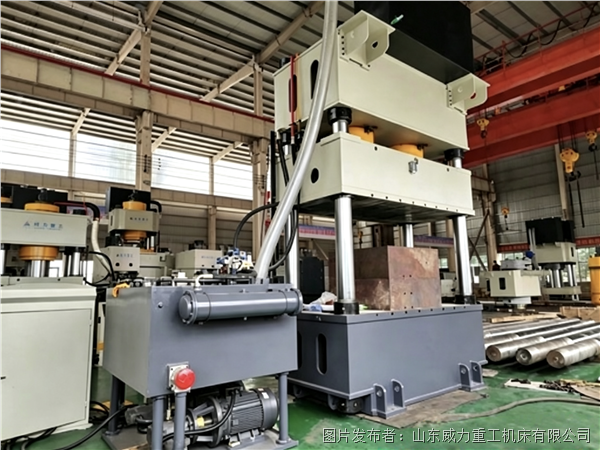
When selecting a hydraulic press for guardrail forming, processing enterprises should not only compare the rated tonnage of the equipment, but also focus on the welding process of the machine body, the quality of the core hydraulic components, and the overall factory pressure testing process. Reputable manufacturers will conduct full-load pressure testing on the entire machine to identify potential problems, and provide comprehensive after-sales support including equipment installation, on-site commissioning, and process guidance. A reasonable equipment configuration combined with standardized process debugging can fully utilize the equipment's performance, stably produce high-quality corrugated guardrail components, help processing plants undertake various road infrastructure orders, and continuously supply qualified safety products for domestic road traffic engineering projects.
 Implicit Collaboration Capabil
 Changes in device connection m
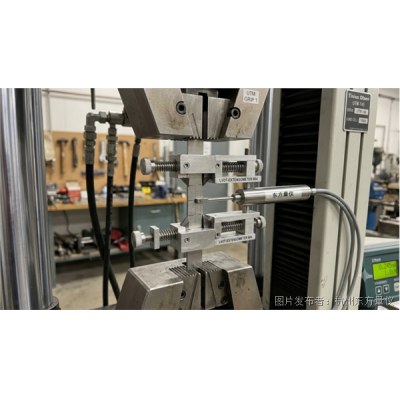 LVDT displacement sensor defor
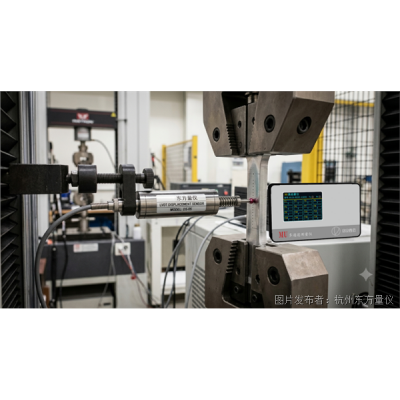 LVDT Displacement Sensor Mater