
Changes in device connection methods in industrial settings
Changes in device connection methods in industrial settings
In the actual deployment of industrial control all-in-one machines, self-service terminals, and various industrial equipment, every choice of connection method involves a trade-off with clear costs between cost, distance, reliability, and flexibility. The core value of wired connections has never been "its existence," but rather the certainty they provide at the physical layer. This certainty is reflected in several aspects, including anti-interference, latency, and power supply stability.
The differences in cables essentially stem from the varying requirements of transmission protocols on the physical medium. USB cables contain more than just a few copper wires; different USB versions have different requirements for shielding structure, differential impedance control, and signal line twist pitch. A substandard USB 3.0 cable can cause link instability or speed degradation during high-speed transmission. Network cables have evolved from Category 5 to Category 6, then to Category 6a and Category 7. Each upgrade involves not only changes in copper core diameter and twist density but also fundamental differences in crosstalk suppression structures. In industrial environments, network cables often share cable trays with high-power power lines. Without sufficient crosstalk immunity, packet loss and retransmissions will continuously degrade communication efficiency. HDMI and DisplayPort cables face even greater challenges in high-resolution, high-refresh-rate scenarios, directly testing cable bandwidth. If the cable fails to reach its rated speed, screen flickering or blackouts will occur, which is unacceptable in industrial control and digital signage applications requiring stable information display over extended periods.
However, it must also be recognized that wired connections cannot solve all problems. In situations where equipment needs to be moved, such as industrial control terminals on AGVs or touchscreens on medical carts, cables themselves are physical constraints limiting the range of movement. In locations with limited deployment space or where renovations have already been completed, the time cost and construction difficulty of re-wiring often far outweigh the value of the equipment itself. In these scenarios, the value of wireless connectivity is not a cheap alternative to wired connections, but rather an alternative that wired connections simply cannot provide—it doesn't offer better performance, but rather deployment feasibility that wired connections cannot achieve.

Wi-Fi is mature enough for indoor scenarios to meet the mobile data transmission needs of most commercial and light industrial settings. Industrial-grade Wi-Fi access points offer significant improvements over consumer-grade devices in roaming handover, interference resistance, and device capacity, supporting dozens of mobile terminals simultaneously and stably online within a workshop. The widespread adoption of 4G/5G modules eliminates the need for wired network infrastructure for outdoor self-service terminals, remote monitoring stations, and distributed vending machines—a single SIM card is all that's needed for network access. For terminals deployed extensively outdoors or in remote locations, this isn't just about convenience, but a prerequisite for commercial viability. Near-field wireless protocols such as Bluetooth and UWB are primarily used for low-power, short-range connections between devices and specific sensors or peripherals, offering a lightweight yet precise supplement to traditional connectivity.
In practice, industrial control system design is almost never a matter of choosing between wired and wireless. The touchscreen all-in-one machines at the core control stations of the production line are connected via industrial Ethernet to ensure real-time performance, while mobile inspection tablets in the same workshop connect to the same MES system via Wi-Fi . Self-service ordering terminals use a single network cable for data transmission and power supply to the large screen display, but the back-end management system synchronizes business data to the cloud via a 4G module, while reserving a network port as a backup channel in case of network outages. This multi-layered, multi-path connection design is not about assembling a complete feature list, but about proactively paving the way for different failure modes.
Choosing the right cables, interfaces, and whether to include wireless backup ultimately reflects a system designer's answer to a more fundamental question: In what environment will this device operate? What are the costs of communication interruptions? Will the cabling environment change in the next three years? Will maintenance personnel be able to easily troubleshoot cable faults? There are no standard answers to these questions, but solutions that haven't considered these issues will inevitably reveal their overlooked aspects at some point.

From an industry perspective, the evolution of connectivity technologies is driving changes in device form factors. The widespread adoption of PoE power delivery has freed the deployment of wall-mounted terminals and embedded screens from the physical location of power outlets, directly impacting the spatial design flexibility of self-service terminals. The widespread use of Type-C interfaces allows a single device to handle data transmission, video output, and charging simultaneously, simplifying panel layout and cable management. Modular design of wireless modules allows equipment manufacturers to offer multiple networking options for the same industrial control all-in-one machine, enabling customers to choose which modules to use based on site conditions, rather than having the connection method predetermined for them.
When defining device interfaces and selecting networking solutions, the core issue is not "can we install all the interfaces?", but rather making reasonable trade-offs based on an understanding of the customer's actual deployment scenario—which interfaces should retain physical ports, which can be delegated to wireless or external expansion modules, and which connections need to be redundantly designed at the hardware level to accommodate potential failures. This trade-off is essentially a projection of the understanding of the scenario onto the hardware design.
 Implicit Collaboration Capabil
 Changes in device connection m
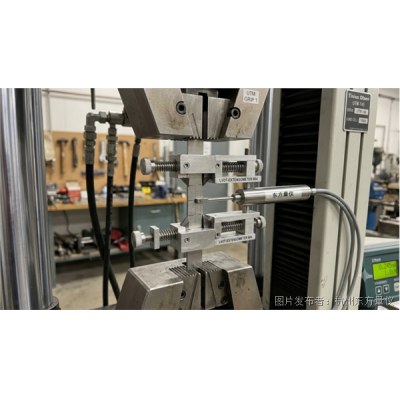 LVDT displacement sensor defor
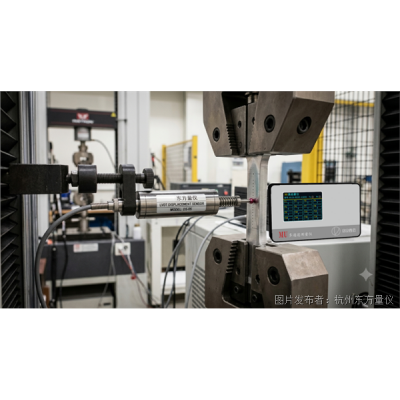 LVDT Displacement Sensor Mater