
How to measure the liquid ammonia level at 40 bar?
How to measure the liquid ammonia level at 40 bar? High-pressure liquid ammonia storage tank.
The difficulty in measuring the liquid ammonia level is not just due to the "high pressure".
In high-pressure storage tanks, instruments must not only identify changes in liquid level but also cope with conditions such as high-pressure sealing, medium evaporation, temperature variations, and pressure-bearing process connections. If the measurement results are used for valve regulation, the continuity and stability of the liquid level signal will directly affect the control process.
A recent project encountered the following operating conditions: the media included liquid ammonia, oil, and carbon dioxide, with the liquid ammonia pressure at approximately 40 bar and the carbon dioxide system pressure at approximately 52 bar. Continuous level signals were required on-site to control valve operation; a simple level switch solution was not considered, and a radar level gauge was proposed for measurement.
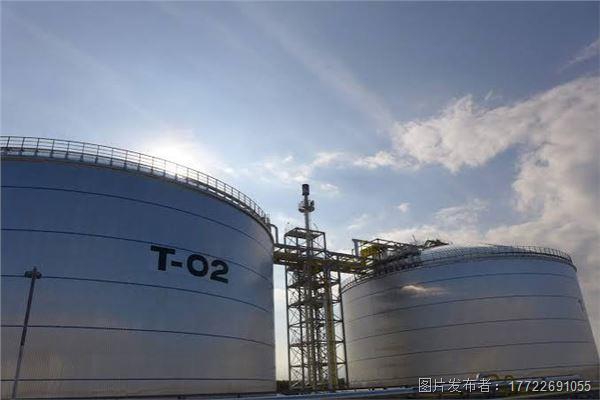
Therefore, determining the liquid ammonia level at 40 bar requires considering three aspects: continuous measurement, high-pressure structure, and medium characteristics.
Why is liquid ammonia more suitable for continuous liquid level measurement?
A liquid level switch can only determine whether there is liquid at a certain position, and is suitable for high-level alarm, low-level alarm or interlock protection.
If the process requires adjusting the valve opening based on changes in liquid level, a continuous liquid level signal is needed.
For example, if the liquid level rises from 40% to 60%, the control system needs to see the entire change process, rather than just knowing whether the liquid level has reached a certain fixed position.
In this project, the client explicitly stated that the level signal is used to control valve action, so the measurement requirement is closer to a continuous level gauge than a high/low level switch.
This is also a point that needs to be distinguished first when selecting a high-pressure liquid ammonia storage tank:
Alarm and continuous control are two different measurement tasks.
What impact does 40 bar high pressure have on liquid level gauges?
40 bar is approximately equal to 4 MPa.
Under such pressure conditions, the connection between the instrument and the storage tank needs to withstand the process pressure for a long time, so we cannot only focus on the radar range and measurement accuracy.
The process connections, flange grades, sealing structures, and the connection method between the probe and the tank must all be matched to the on-site pressure conditions.
For high-pressure storage tanks, if the process connection structure is not suitable, even if the measurement principle itself can detect the liquid level, it is not feasible to apply it.
Therefore, when selecting a high-pressure liquid ammonia level gauge, it is necessary to consider "whether it can measure" and "whether it can withstand pressure" separately.
The former is determined by the measurement principle, while the latter is determined by the instrument's mechanical structure and process connection.
What impact does liquid ammonia have on the measurement?
Liquid ammonia is a volatile industrial medium.
The storage tank contains both liquid and gas phases, and changes in liquid level may be accompanied by changes in pressure and temperature. This type of environment is significantly different from that of an atmospheric pressure water tank.
If a contact measurement method is used, the probe or float needs to be in the medium environment for a long time, and the material compatibility, sealing and mechanical structure need to be confirmed.
Radar level gauges use electromagnetic waves for distance measurement, which can reduce the impact of direct contact between mechanical moving parts and liquid, and therefore have application potential in continuous liquid level measurement of high-pressure vessels.
However, radar is not something that "does not need to consider operating conditions if it does not come into contact with liquids".
Since the antenna and process connection are still located inside the storage tank environment, the configuration still needs to be determined in combination with pressure, temperature and installation structure when selecting them.
Why can radar level gauges be considered for high-pressure liquid ammonia?
Radar level gauges transmit electromagnetic waves to the liquid surface via an antenna and calculate the liquid level based on the echo signal.
Compared to contact measurement methods such as floats and capacitors, radar does not have a mechanical structure that needs to move up and down with the liquid level, thus reducing the structural complexity caused by mechanical moving parts in high-pressure environments.
For liquid ammonia storage tanks, if continuous output of liquid level signals is required, radar can also be directly used in control systems such as PLC and DCS .
This is also why radar level gauge solutions were proposed for the 40 bar liquid ammonia and 52 bar carbon dioxide projects.
However, the applicability of high-pressure radar level gauges depends on the instrument's process connection and the product's permissible pressure range.
The pressure rating should not be ignored simply because "radar is suitable for liquid level measurement".
Can magnetic flaps be used for a 40 bar liquid ammonia storage tank?
Magnetic level gauges are also commonly used for continuous level display in storage tanks.
It uses a float inside a bypass pipe to move with changes in liquid level and utilizes magnetic coupling to achieve on-site display.
For pressure vessels such as liquid ammonia, the magnetic flapper solution requires the bypass pipe, float, flange, and welded structure to share the process pressure, making the equipment structure more complex than for atmospheric pressure applications.
If the project requires on-site visual display of liquid level, magnetic floats can be considered as a candidate solution for technical evaluation.
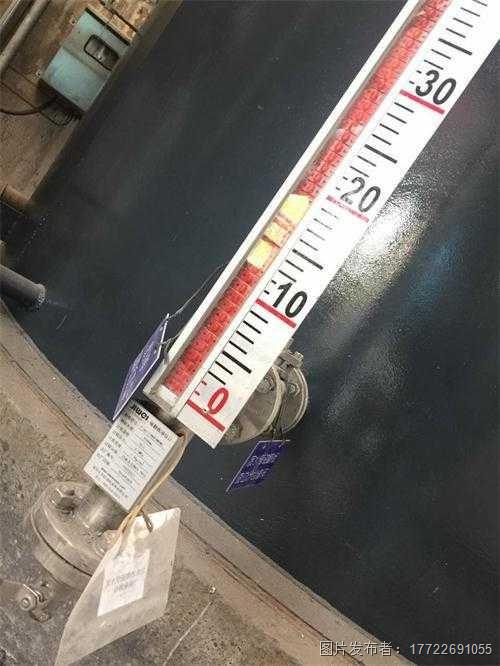
However, if the main purpose of measurement is to provide continuous signals to the control system and reduce mechanical moving parts, radar level gauges are often more suitable for forming non-mechanical continuous measurement schemes.
Therefore, the difference between the two can be understood as follows: radar is biased towards electronic continuous measurement, while magnetic flip is biased towards on-site mechanical liquid level display.
The specific method to be used depends on the process control method and equipment structure.
Why does a 52-bar CO2 system need to be evaluated separately?
In the same project, in addition to 40 bar liquid ammonia, a carbon dioxide system with a pressure of about 52 bar is also involved.
Increasing the pressure from 40 bar to 52 bar may seem like just a numerical increase, but it means higher pressure requirements for the instrument structure.
Therefore, even if the same model can be used for liquid ammonia at 40 bar, it cannot be directly deduced that it can be used for carbon dioxide at 52 bar.
The product's permissible process pressure, process connections, and media conditions need to be rechecked.
This is also where common misconceptions arise in high-pressure liquid level gauge projects:
Similar media or the same measurement principle do not mean that pressure ratings can be directly interchanged.
How to choose a high-pressure liquid ammonia level gauge?
For continuous liquid level measurements such as 40 bar liquid ammonia, a relatively clear line of reasoning can be followed.
If the process only requires high and low level alarms, level switch products can be evaluated; if the level signal needs to be used for valve regulation, a continuous level gauge should be used.
In continuous measurement solutions, radar level gauges can reduce the number of moving mechanical parts, but it is necessary to confirm the process pressure, connection structure, and on-site installation conditions.
If on-site observation of the liquid level is still required, a high-pressure magnetic level gauge can be further evaluated, or a combination of a continuous level gauge and on-site display can be used.
Therefore, the core of 40bar liquid ammonia level measurement is not simply choosing a measurement principle, but rather ensuring that continuous measurement and high-pressure structure simultaneously meet the on-site process requirements.
Solution: Radar continuous liquid level measurement can be evaluated under high-pressure conditions.
For liquid ammonia, oil, and high-pressure gas-liquid systems that require continuous liquid level signals, corrosion-resistant radar level gauge solutions can be evaluated based on site conditions.
According to recent project documentation, the liquid ammonia system requires approximately 40 bar, and the carbon dioxide system requires approximately 52 bar. The customer needs continuous level signal control for the valves and has specifically stated that the Radar 23 solution is suitable.
In these types of working conditions, corrosion-resistant radar level gauges can be used as a continuous measurement solution for technical evaluation, but the specific model cannot be determined solely based on "liquid ammonia" or "40 bar".
The configuration needs to be confirmed based on the product's permissible process pressure, flange specifications, temperature, installation location, and tank structure.
For 52 bar carbon dioxide systems, the pressure limits of the products should be checked separately, and the 40 bar liquid ammonia solution should not be applied directly.
The selection logic for high-pressure liquid ammonia level measurement can be summarized as follows: continuous measurement requirements determine the instrument type, high-pressure conditions determine the structural configuration, and the medium and installation conditions determine the specific solution.
 Implicit Collaboration Capabil
 Changes in device connection m
 LVDT displacement sensor defor
 LVDT Displacement Sensor Mater